
The Shift Towards a Circular Office
The modern office is shifting. It has to do more than look good. It has to support people properly and increasingly account for what it consumes. Sustainable office fit-outs are becoming a greater priority for business owners.
Every desk, chair, printer, and device should be selected carefully, situated within a broader conversation about environmental responsibility.
For Australian businesses, ESG (Environmental, Social and Governance) expectations must now be considered alongside office design decisions. Australia alone discards around 35,000 tonnes of commercial office furniture each year, and e-waste continues to rise as technology is replaced and upgraded.
As a nation with an ambition to double its circularity by 2035, the question is no longer just what does this office need today? It’s how long these assets will last, and what happens to them afterward?
This is where the circular office begins: with a shift away from short-term purchasing decisions and towards workplaces that are designed to adapt and reduce waste over time.
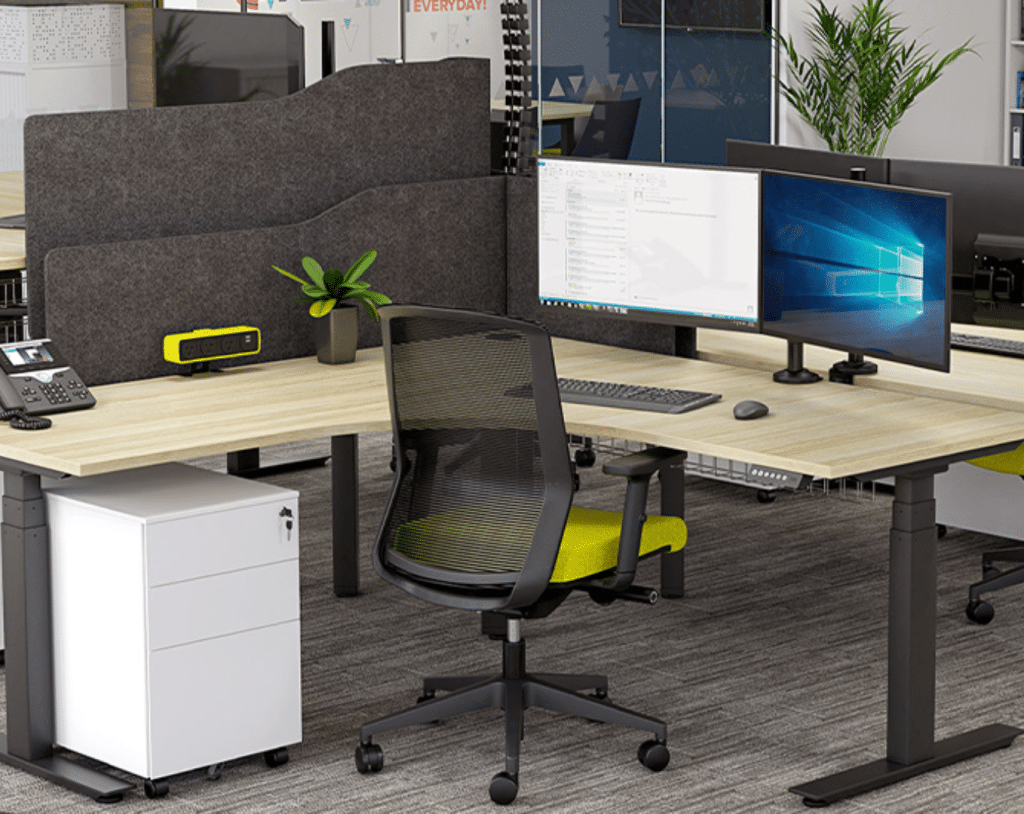
How Office Fit-Outs Create Hidden Waste
Office waste is not usually top of mind for Australian business owners. Most are focused on the bigger questions: how to support staff and manage costs.
But this is exactly why office waste matters.
When furniture is discarded and replaced, technology is upgraded without a plan, or equipment sits in the storage room, unused – the issue extends beyond the environment. It becomes a cost issue, a space issue, and increasingly an ESG issue.
A poorly planned office fit-out can create waste long before anything reaches landfill. Printers, monitors, desks, and chairs can subtly become hidden liabilities as the workplace starts to carry more than it needs: more assets, more clutter, more maintenance, and more avoidable costs.
What a Circular Office Fit-Out Looks Like
A circular office fit-out begins with making careful decisions at each stage of the office lifecycle. It does not mean building a perfect zero-waste workplace overnight.
Instead of the traditional model of buying, replacing, and discarding, a circular approach involves asking questions before making purchases. What is being selected, how long will it last, how does it perform, and what happens when the business changes?
That might mean choosing desks and chairs designed for commercial longevity, not short-term replacement.
It could also mean moving beyond furniture and considering things like Managed Print Services to reduce unnecessary printing, monitor consumables, and avoid having more devices than the workplace actually needs.
It may also mean leasing office furniture and technology, so that assets can be maintained and upgraded more responsibly over time.
Furniture That Stays Useful for Longer
Furniture is one of the best places to start when considering a more sustainable workplace.
Every piece of furniture represents materials, transport, cost, space, and eventually disposal or reuse. When furniture is selected based on aesthetics or price alone, it can create a faster replacement cycle.
A more circular fit-out starts with furniture designed for commercial longevity.
In office seating, for example, that means looking for features such as a sturdy base, durable upholstery, replaceable components, and warranties or certifications. The Rapidline Ergo Task Ergonomic Heavy Duty Chair, for example, comes with a 10-year warranty and features commercial-grade upholstery and reinforced bases.
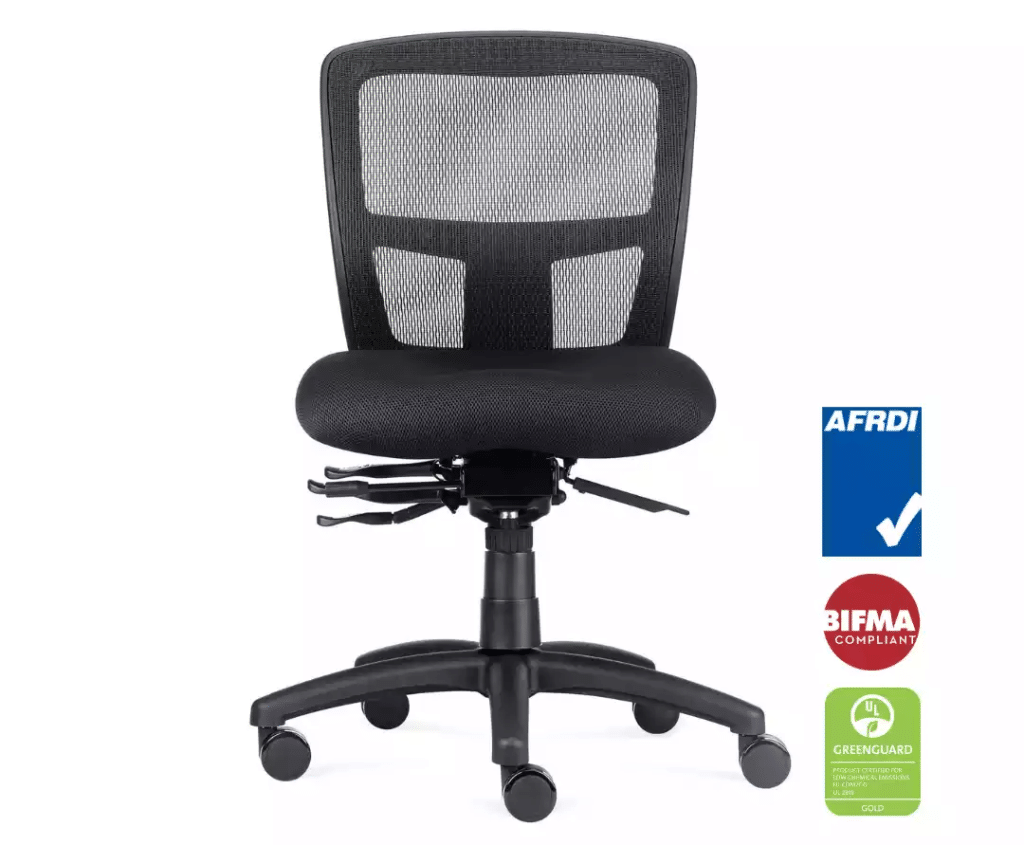
Lease (12 months+), Buy, or Rent Ergonomic Chairs
The same principle applies to desks, workstations, and meeting room furniture. And it’s important to remember that the most sustainable furniture isn’t necessarily the piece with the greenest label. Often, it’s the product that doesn’t need to be replaced quickly.
Managed Print Services as a Waste-Reduction Tool
Print is one of the most overlooked office services.
What many business owners don’t realise is that unmanaged printing can quietly create paper waste, energy waste, and unnecessary costs.
Managed Print Services can become part of a more circular office strategy by helping Australian businesses better understand how printing is being used across the workplace. Solutions may include reducing unnecessary printing, consolidating underused devices, setting a default to double-sided printing, and replacing older printers with more energy-efficient models.
It can also help businesses design smart digital workflows in which documents are scanned, shared, and stored electronically, avoiding the waste of paper and ink that would otherwise be discarded. According to NSW EPA figures, the typical commercial office waste bin contains 76% paper and cardboard, much of which could be recycled or avoided altogether with better systems.
Sustainability Victoria has also noted that paper is the largest component of office waste and that it takes 24 trees to produce one tonne of virgin office paper.
Leasing as a Circular Strategy
For many businesses, leasing furniture and technology can be a more flexible pathway to creating a zero-waste or circular office. Print leasing, alongside workplace furniture and technology leasing, gives businesses a more flexible way to manage printers, computers, monitors, and other equipment in line with how their offices actually operate.
Instead of buying everything outright, leasing allows the workplace to stay responsive and adapt as the business evolves. Teams grow and layouts change. A circular strategy recognises that the office is not static, so the way assets are managed shouldn’t be static either.
This can help reduce overbuying and prevent old equipment from sitting unused long after it has served its purpose in the workplace.
Leasing can also make it easier to access the latest technology through newer, more energy-efficient devices. Printers, computers, monitors, and other workplace equipment can be planned and adapted around actual business needs.
A sustainable office is about choosing better and managing every asset with purpose.
The ESG Benefit
ESG is often associated with large-scale sustainability targets, but for many Australian businesses, it comes down to everyday operational decisions.
A circular office fit-out gives businesses a clearer way to think about the lifecycle of workplace assets, with each decision viewed with a longer-term focus.
It also creates a better workplace when procurement is more intentional, offices become easier to manage, and are better aligned with how people actually work. In the best workplaces, sustainability isn’t a compromise. It’s built into the quality of the furniture and the efficiency of technology.
For larger businesses, this is how ESG becomes more than a reporting requirement. It becomes part of how the workplace performs every day.
Read more: From Desk Farms to Work Ecosystems: How Modern Office Design is Changing Australian Workplaces
How Mitronics Brings it All Together
A circular office requires planning, as it is difficult to build through isolated purchasing decisions.
When these decisions are made separately, businesses can end up with more equipment than they need or with technology that quickly becomes outdated.
From sustainable furniture decisions to business technology and Managed Print Services, Mitronics helps businesses think about the workplace as a complete ecosystem. That matters because every asset has a lifecycle. Furniture should be selected for comfort, employee well-being, and sustainability. Print environments should be managed to reduce waste and inefficiency.
The commercial value is real. In one Australian Government example, a furniture reuse initiative helped avoid approximately $300,000 in replacement costs while saving an estimated 44 tonnes of CO₂-e. For businesses, this is the power of circular thinking: the right workplace decisions can reduce waste and protect budgets simultaneously.
Mitronics helps businesses of all sizes choose products and services that work together, not against each other.
The result is a more thoughtfully designed workplace where all elements work together and create a more enjoyable workplace experience.
Ready to Create a Smarter, More Sustainable Workplace?
Speak with Mitronics about creating a workplace that supports your team and long-term sustainability goals. Create a more thoughtfully designed workplace:

Roger Amir is the Director of Mitronics Corporation Australia, a leading provider of Office Equipment Supplies, Technology, Photocopiers, and Managed IT Services. He oversees strategic operations, helping Australian businesses optimise their workflows and drive productivity. Roger’s expertise focuses on tailored technology strategies, document management, and business efficiency. Connect with him on LinkedIn.