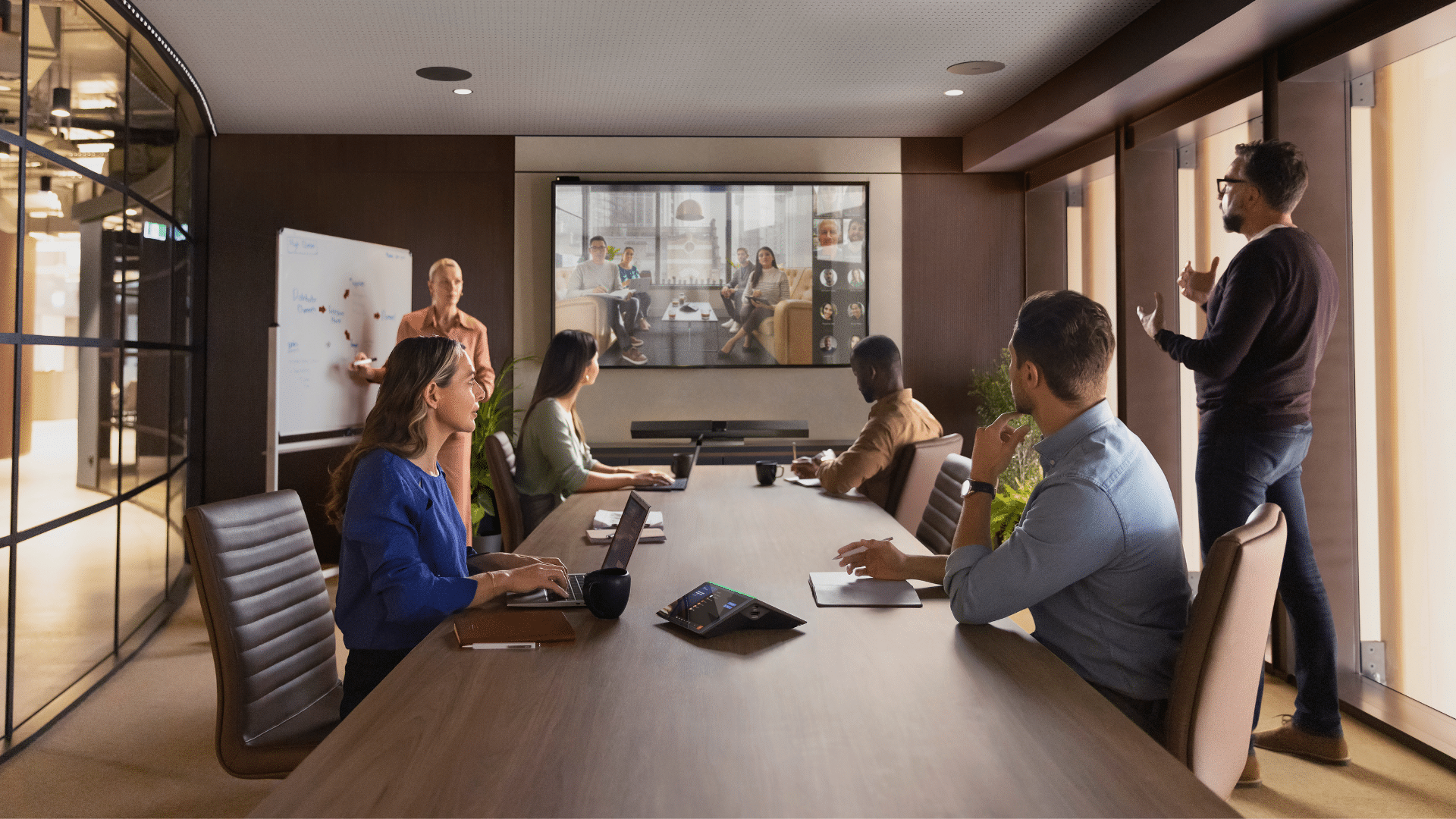


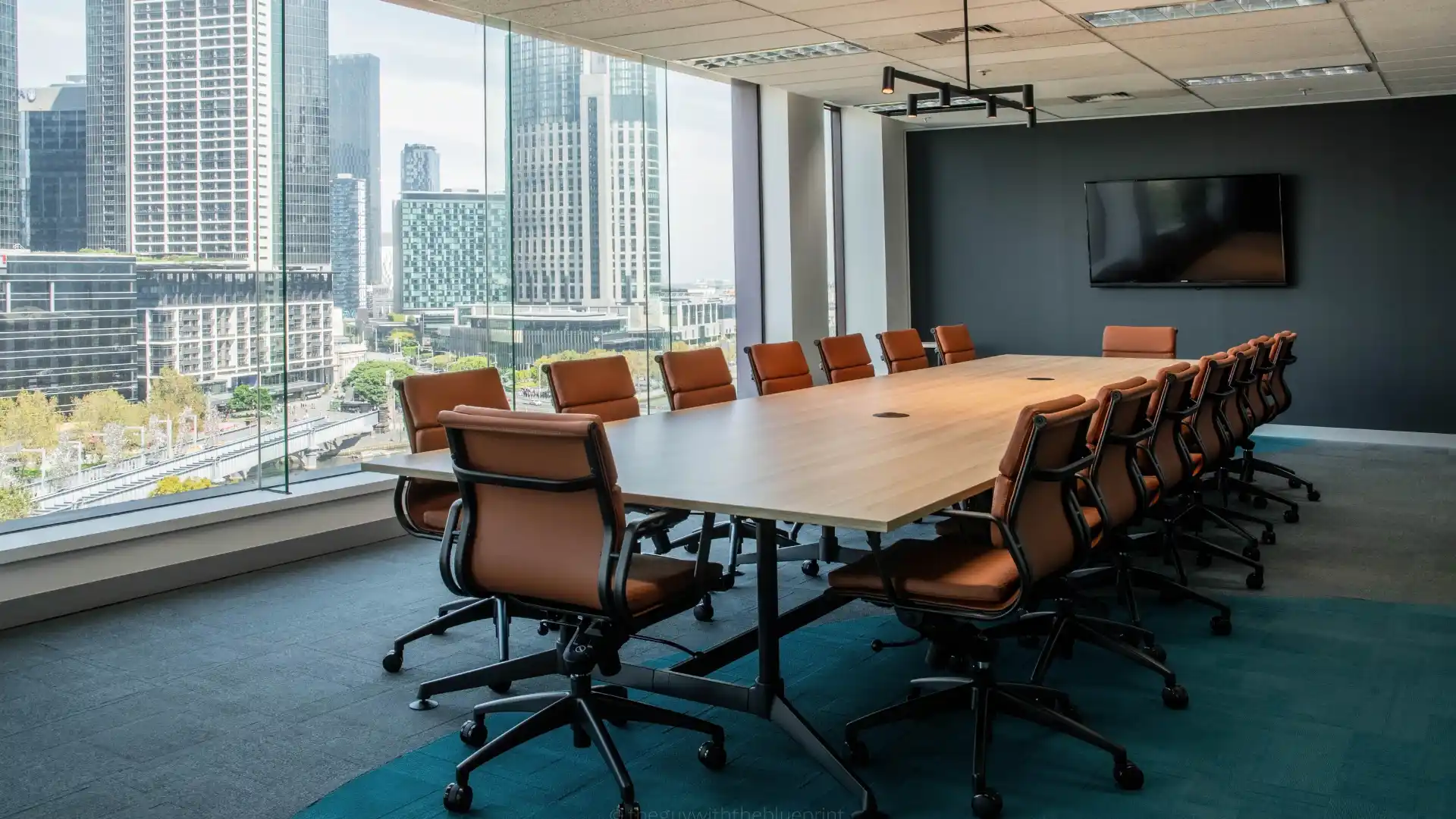
Choosing a boardroom table is not just a question of how many people need to be seated.
The right table also needs to work with the room it’s in. A table might seat eight people on paper, but once you add chairs, power access, a screen and space to move comfortably, the decision becomes less about headcount and more about how the room actually works.
As more Australian teams return to the office to collaborate, the boardroom has taken on more importance. For many teams, it is where the important things happen: leadership meetings, client presentations, and planning sessions. In Sydney and Melbourne CBD offices in particular, the physical meeting room has become an anchor of workplace culture.
So, what size boardroom table do you really need?
This guide will walk you through common boardroom table sizes for 6, 8, 10 and 12 people, with practical advice on room size and layout.
Boardroom table vs conference table: what’s the difference?
The terms boardroom table and conference table are often used interchangeably. In many offices, the difference is insignificant. Both describe a large meeting table designed to bring people together for discussion and decision-making.
However, there is a subtle difference. A boardroom table tends to feel more formal. These tables are often found in executive meeting rooms or client-facing spaces where bigger decisions are made.
A conference table is a broader term. It can refer to almost any large meeting table. It could be used for team workshops, training sessions, project meetings, or everyday conversations.
For most businesses, how the table suits the room matters more.
Boardroom table size guide by seating capacity
Boardroom tables are usually chosen by the number of people they need to seat, but the better question is: how comfortably do they need to sit?
As a starting point, the guide below shows common boardroom table sizes for 6, 8, 10 and 12 people.
| Seats | Suggested Table Size | Best for |
|---|---|---|
| 6 people | 1800mm – 2200mm long x 900mm – 1000mm wide | Small meeting rooms, client consults, and interviews |
| 8 people | 2400mm long x 1000mm – 1200mm wide | Standard boardrooms, team meetings, and hybrid calls |
| 10 people | 3000mm long x 1200mm wide | Management meetings, presentations, and growing teams |
| 12 people | 3600mm long x 1200mm – 1500mm wide | Executive boardrooms, larger meetings, formal spaces |
These measurements aren’t fixed rules. Chair width, table shape, leg placement, cable access and room layout can all change how many people a table seats comfortably.
The aim is to create a space where people can comfortably sit, open a laptop, and move around without feeling crowded.
How much space do you need for each person?
In a meeting room, people need the space to sit down with their laptops without feeling uncomfortable. They should also be able to move in and out of the room without disturbing everyone else.
As a general guide, allow around 600mm to 750mm of table edge per person. This gives each seat enough width to feel comfortable without making the table unnecessarily large.
There should also be enough room for people to pull chairs back and walk behind others once seated. It’s also worth leaving extra space near doors, cabinetry and presentation areas.
In other words, a boardroom table may technically fit inside a room, but the real test is whether the room still works for people once all the other bits and pieces are added.
6-seat boardroom tables
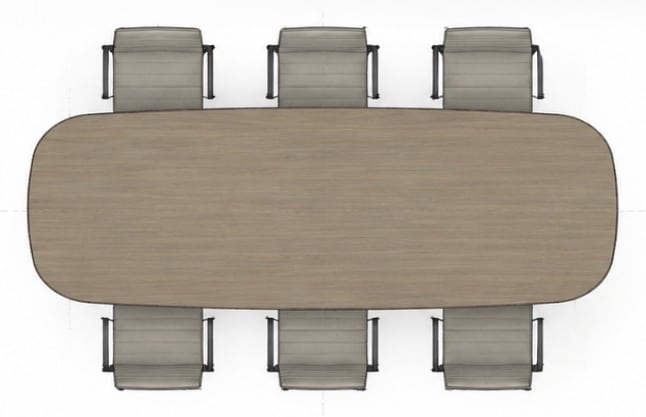
At around 1800mm to 2200mm long, a 6-seat table provides businesses with enough room for interviews, client conversations, and focused team meetings.
This size is useful when space is limited. It is also a practical option for hybrid workplaces. For smaller groups, a 6-seat table can create a natural setting where people can see each other clearly and speak comfortably across the table.
Disclaimer: This is an AI-generated image. AI images may have inaccuracies.
8-seat boardroom tables
An 8-seat boardroom table is one of the most versatile choices for Australian businesses. It’s large enough to feel substantial, but not so large that it overwhelms a standard meeting room.
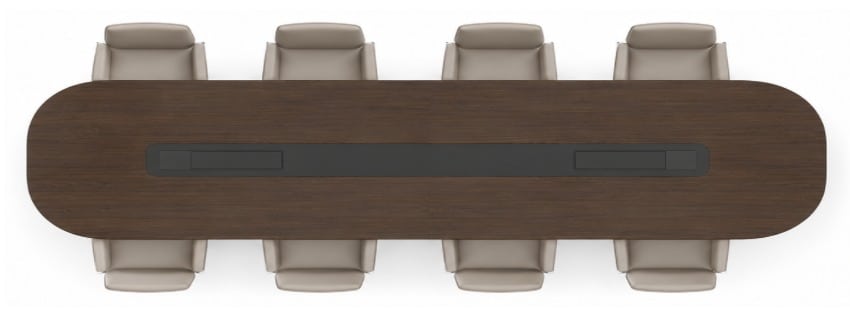
A table around 2400mm long usually works well for eight people, offering a good balance between capacity and comfort.
This is also the point where power access and cable management become more important. If people regularly bring laptops into the room, join video calls, or present from their devices, the table should support these activities. Integrated cable boxes, nearby power points, and clear access to screens can help the room run smoothly.
Disclaimer: This is an AI-generated image. AI images may have inaccuracies.
10-seat boardroom tables
A 10-seat boardroom table is usually a good choice for larger teams and growing businesses where the space needs to support bigger conversations.
At around 3000mm long, the size gives the room more presence. It works well for management meetings and planning sessions that bring several people together around the same table.
This is where careful planning can make a difference. If the room is slightly smaller, a smaller table with enough space to move around will usually feel more professional than a larger table squeezed into the space.
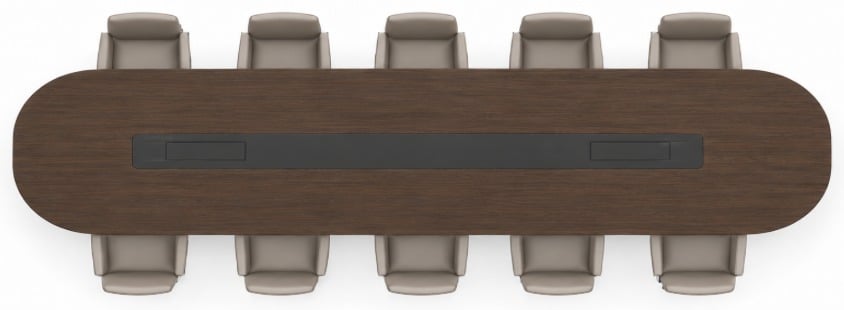
Disclaimer: This is an AI-generated image. AI images may have inaccuracies.
12-seat boardroom tables
A 12-seat boardroom table is designed for larger meeting rooms and executive boardrooms. At around 3600mm long, the size gives the boardroom a clear centrepiece. It allows larger groups to meet comfortably and gives the space the scale needed for leadership discussions or formal presentations.
With a 12-seat table, planning around it becomes just as important as the table itself. Larger meetings often rely on screens, video conferencing, laptop use, and shared presentation tools. Practical cable management and power points should also support the space.
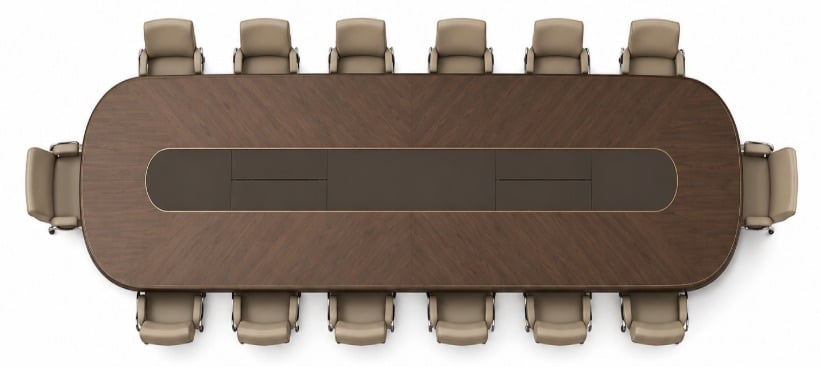
Disclaimer: This is an AI-generated image. AI images may have inaccuracies.
What shape boardroom should you choose?
Size is important, but the shape also changes how a boardroom feels and functions.
Rectangular tables: Best for formal boardrooms, they are among the most common choices. They create a clear sense of direction in the room and usually make the most efficient use of space.
The Potenza Boardroom Table is a good example of how this style can still feel contemporary. Its 2400mm x 1200mm rectangular footprint makes it a practical option for an 8-seat boardroom, while the shark-nose edge gives the tabletop a slimmer, more refined profile.
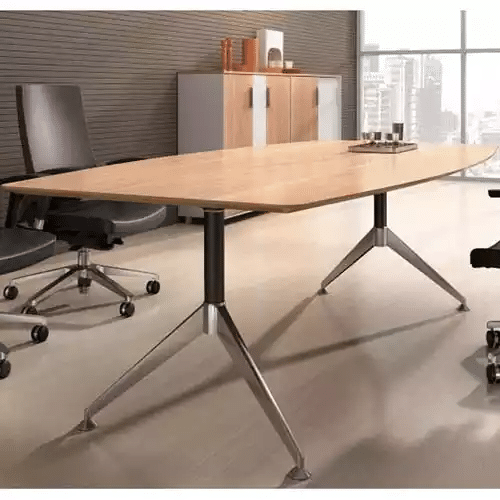
Potenza Boardroom Table
Boat-shaped tables: Best for boardrooms used for presentations, video conferencing, or group discussions. A boat-shaped table is wider through the centre and slightly narrower at the ends, which can improve sightlines across the table. This makes it easier for people to see each other and the screen while still keeping the formal feel of a traditional boardroom.
A table such as the OM Premier Boardroom Table shows how this shape can keep the formality of a traditional boardroom table while creating a softer, more open feel for meetings.
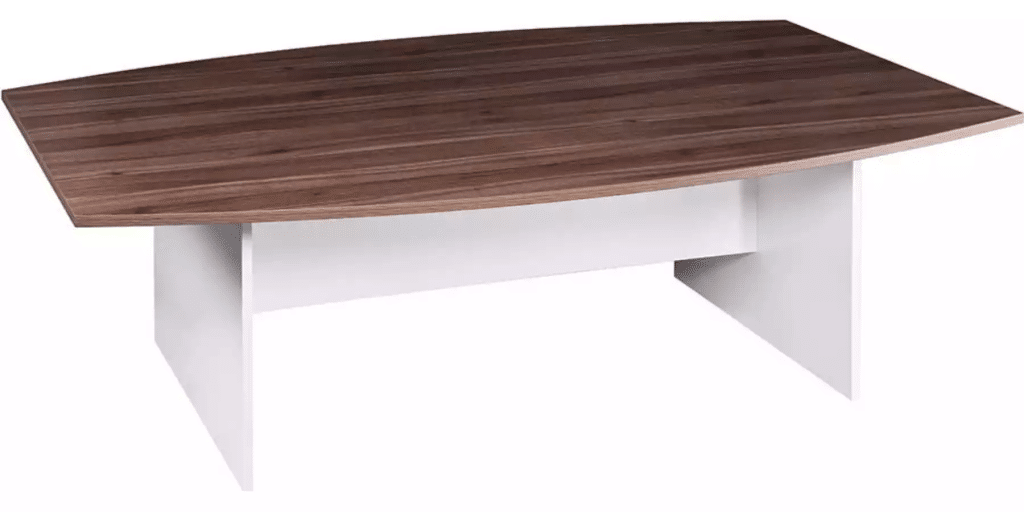
OM Premier Boardroom Table
Round tables: OLG Plantation Meeting Table is best for smaller meeting rooms, interviews and informal discussions. Because there is no “head” of the table, round tables can feel more conversational. They are a good choice when discussion and collaboration are the goal; however, they typically seat fewer people than rectangular or boat-shaped tables.
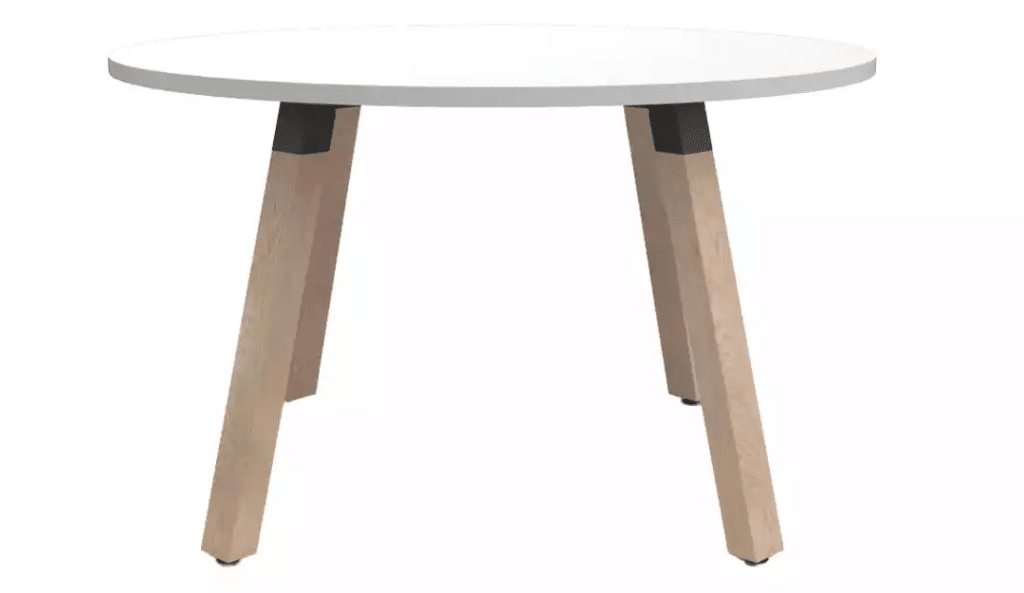
OLG Plantation Meeting Table
Square tables: Best for compact rooms and small teams. A square table is good for teams of four to six people who meet regularly, and looks best when the room is square. Like round tables, they can encourage more balanced discussion, but they are generally less practical for larger, formal boardrooms.
Modular tables: Best for flexible meeting rooms, training spaces, or workshops. Modular tables can be moved and reconfigured, depending on the meeting format. This makes them useful for offices with limited space and works well for classroom-style training or breakout sessions.
Leasing a boardroom table can help preserve capital
Boardroom costs can add up quickly. A boardroom table is just one piece of the picture. Often, when refreshing a boardroom, a business will also need chairs, a display screen, conferencing tools, and reliable power access. Bought all at once, those costs can add up quickly.
Leasing can make a boardroom refresh easier to plan. Whether it’s a boardroom table or a more complete set-up, leasing can help businesses spread the cost over time and preserve capital for other priorities.
It can also help businesses create a more professional meeting space sooner. For teams returning to the office or hosting clients, leasing can be a practical way to set up a boardroom without incurring high upfront costs.
Lease your entire boardroom for $X/week.
Read more: The Smart Boardroom: How to Create Modern Meeting Spaces
Create a boardroom that works for your team
Whether you need a 6-seat table for a smaller meeting room or a larger boardroom setup for client presentations and leadership meetings, Mitronics can help you design a space that works.
Explore Mitronics’ range of professional meeting tables, or speak with our team about buying and leasing options.

Roger Amir is the Director of Mitronics Corporation Australia, a leading provider of Office Equipment Supplies, Technology, Photocopiers, and Managed IT Services. He oversees strategic operations, helping Australian businesses optimise their workflows and drive productivity. Roger’s expertise focuses on tailored technology strategies, document management, and business efficiency. Connect with him on LinkedIn.