

Workplace design across Australia is changing. Traditional offices built around desks and individual tasks are giving way to spaces that support collaboration and performance.
As hybrid work becomes the norm, organisations are placing greater focus on how their environments support employees. It’s no longer enough for a space to look professional. It needs to actively support teams and their best work.
According to the Australian HR Institute, 64% of employees feel their work environment does not effectively empower them to perform at their best.
Meeting spaces, like boardrooms, should be designed not only for comfort but with technology that supports productivity and encourages collaboration. Outdated technology and design can result in delays and disconnected systems that frustrate employees and slow down work.
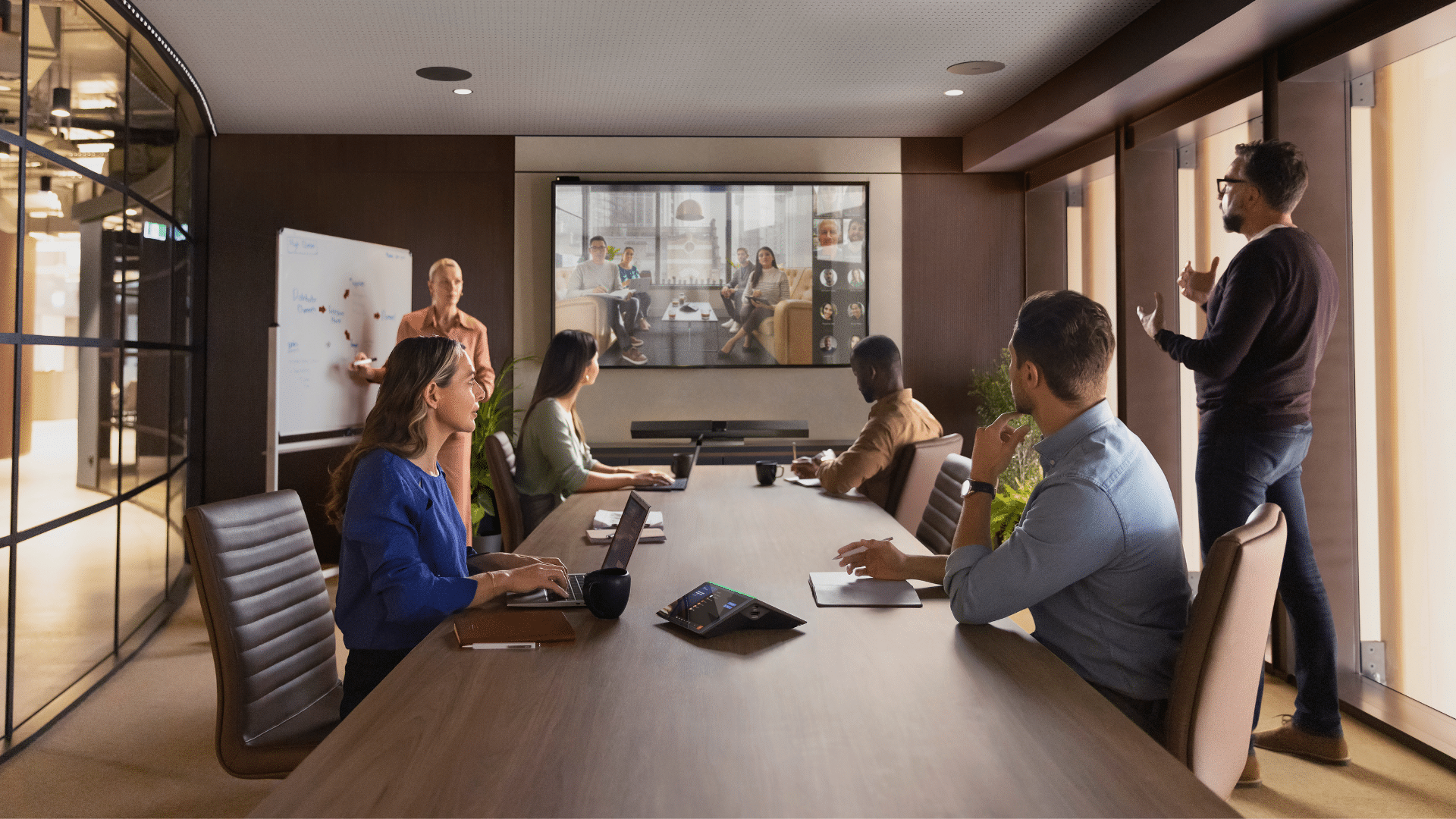
With many teams now split between in-person and remote participants, the boardroom is no longer just a place to meet. It needs to function as a connected, high-performing space where design and technology integrate seamlessly for a better employee experience.
In this article, we explore what defines a smart boardroom today.
What is a Smart Boardroom?
A smart boardroom is a meeting space designed to make collaboration more reliable and more effective.
Every element is designed with intention. From the room layout to the technology, everything should work seamlessly for all participants and allow meetings to start without delays or technical issues.
A smart boardroom is not about adding more technology. It’s about creating a professional space where displays, video conferencing, and room controls work together as one connected system.
The Rise of One-Touch Meetings
One-touch meetings are becoming the standard across modern workplaces.
Walk into the room, and everything is already in place. The table is set. The screen is live. There are no messy cables to deal with and no waiting around while someone figures out how to begin. A single tap – and the meeting starts.
Beyond that, simplicity is a deliberate approach to design. Displays, conferencing platforms, audio and controls are all connected as part of a single system. This, combined with clean lines and considered materials and furniture, results in a meeting space that not only looks professional but also acts as a cohesive meeting environment that enhances collaboration and team connection.
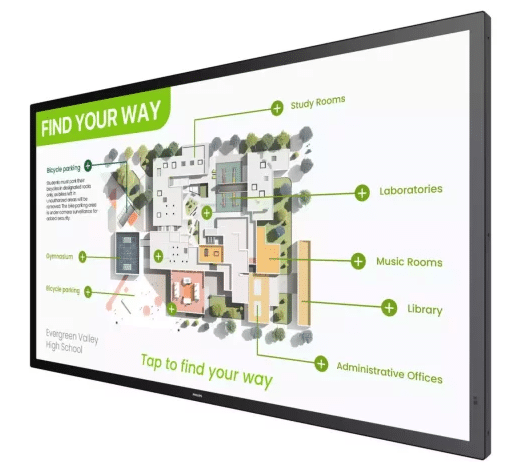
Buy, Rent, or Lease (12 months+) Touch Screen Displays
So, what elements are needed to design a smart boardroom?
The Screen as the Focal Point
No longer just for presentations, the display defines how meetings are run. Video calls, screen sharing, and collaboration all centre around it. When it works well, meetings become a productivity hub.
This is where integrated interactive displays from brands like CommBox and MAXHUB make a difference. These technologies remove the need for separate devices and remotes by bringing video conferencing, wireless screen sharing, and room controls into a single-touch interface.
In practical terms, it removes the small points of friction that can cause delays and frustration. A manager can walk into the room and start a scheduled meeting straight from the display. A team member can share content wirelessly without interrupting the flow of the discussion. Everything is done through one surface.
Shaping the Room Around the Table
The OLG Team Boardroom Table is designed to support the way modern teams meet and collaborate. Its clean, streamlined form creates a professional and adaptable centerpiece, while a range of sizes and configurations ensures it can suit anything from small discussions to large boardroom sessions.
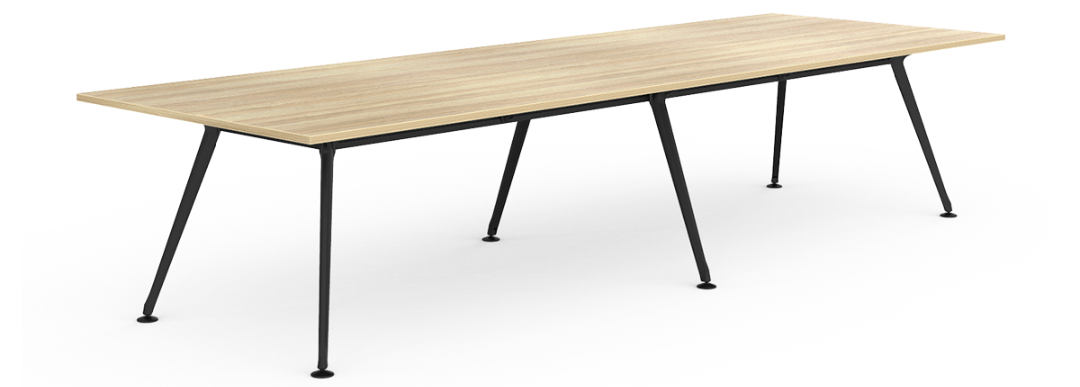
The generous work surface pairs seamlessly with today’s technology—providing ample space for laptops, integrated connectivity, and clear sightlines to video conferencing displays and interactive screens. Built with a durable frame, it delivers a reliable and practical setup for presentations, teamwork, and decision-making, helping create a space that feels organised, functional, and ready for productive meetings.
Designed to Work as One System
What defines a smart boardroom is how well all the components work together.
In many workplaces, meeting rooms evolve over time. New technology is layered onto existing setups. The idea is to design a boardroom that allows smooth integration of new technology over time.
Designing a smart boardroom treats the space as a single system from the outset.
That starts with scale.
In smaller meeting rooms, a simple system is enough. A single integrated display, integrated conferencing and a clean table layout are enough for anyone to use.
In larger boardrooms, things like sightlines and audio coverage become more important. The positioning of the table and display affects how effectively people can engage.
When the table, display and conferencing tools are designed to work together, the room becomes easier to use and far more reliable.
Where Many Boardrooms Fall Short
Despite the investment in new technology, many boardrooms still underperform.
In most cases, the issue isn’t the quality of equipment, but how it’s integrated. When pieces of technology are added to a room without a clear plan, it can cause fragmentation and inconsistent meeting experiences.
Meetings take longer to start. Even simple tasks, like screen sharing, can become unnecessarily complicated. In some setups, users still rely on multiple remotes or control systems to manage audio, video and display settings.
With a coordinated approach, these problems can be avoided.
Beyond Installation: Why Ongoing Support Matters
A smart boardroom needs to be designed to perform consistently over time.
Displays require updates, conferencing tools evolve, and small technical issues should be resolved quickly. Without ongoing support, a well-designed space can fall short.
Mitronics provides not only the office furniture and technology, but the ongoing support needed to keep boardrooms running smoothly.
If you’re planning an upgrade or looking to improve how your meeting rooms function, then Mitronics can help you design a solution that supports modern work – and continues to perform long after installation.

Roger Amir is the Director of Mitronics Corporation Australia, a leading provider of Office Equipment Supplies, Technology, Photocopiers, and Managed IT Services. He oversees strategic operations, helping Australian businesses optimise their workflows and drive productivity. Roger’s expertise focuses on tailored technology strategies, document management, and business efficiency. Connect with him on LinkedIn.