

In today’s data-driven world, businesses face an overwhelming flow of information.
Managing this data securely, efficiently, and without disruption has become critical – especially as Australian workplaces embrace hybrid and remote models.
Digital Document Management is now central to business transformation, giving teams instant access to information while keeping it organised and protected. The Australian Document Management market is projected to reach approximately AUD 800.9 million by 2025, with a strong CAGR of more than 14.9% between 2025 and 2030 [Source]. This growth highlights the increasing demand for modern systems that can scale with rising data volumes and support modern business
What is Digital Document Management?
A Digital Document Management System (DMS) is more than just cloud storage – it’s a complete solution that helps organisations store, organise, secure and retrieve documents in digital form. Unlike basic file-sharing platforms, a DMS adds powerful features such as indexing, version control, role-based access permissions, and instant retrieval.
Core components typically include cloud storage, advanced search tools, role-based access control, and detailed audit trails. These functions ensure businesses can find information quickly, keep it secure, and meet compliance requirements. That’s why industries like healthcare, finance, and legal services rely heavily on DMS solutions, where accuracy, security, and efficiency are non-negotiable.
How MFPs Help with Document Management?
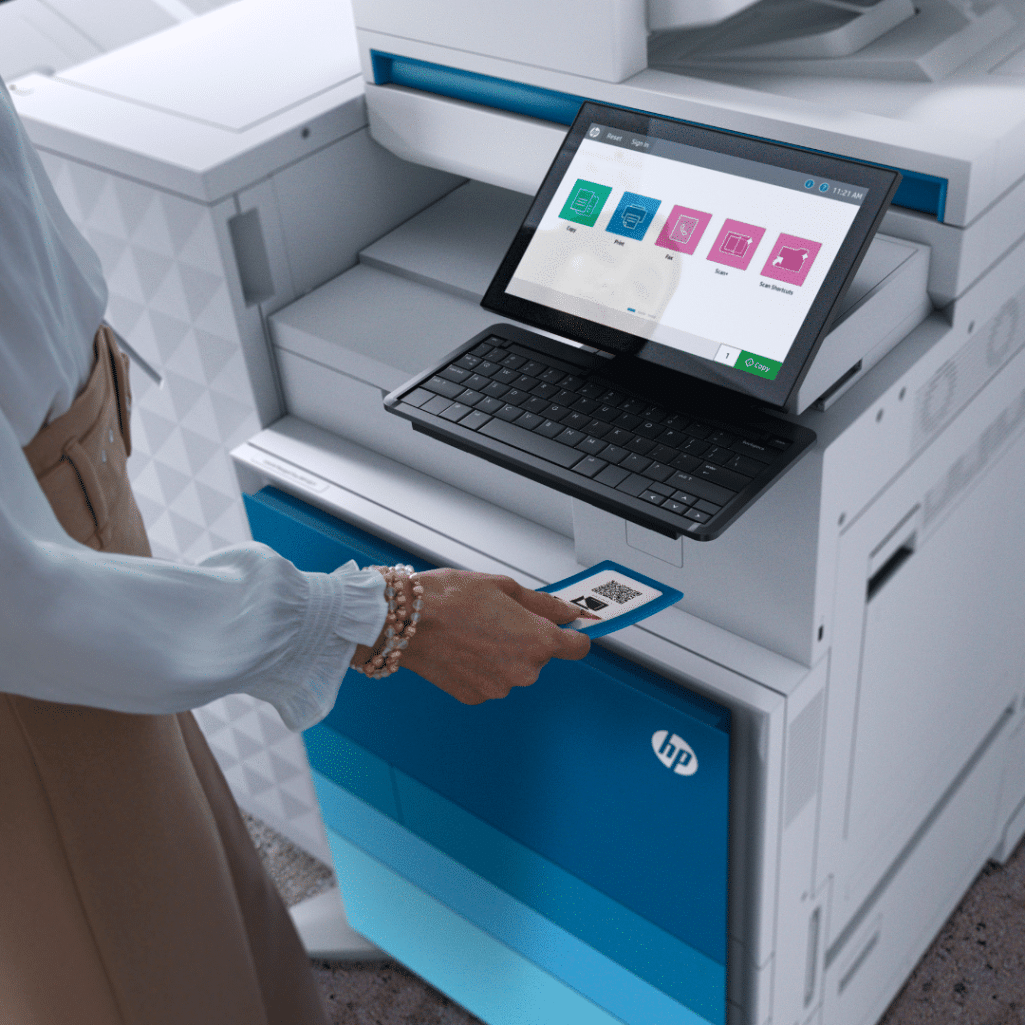
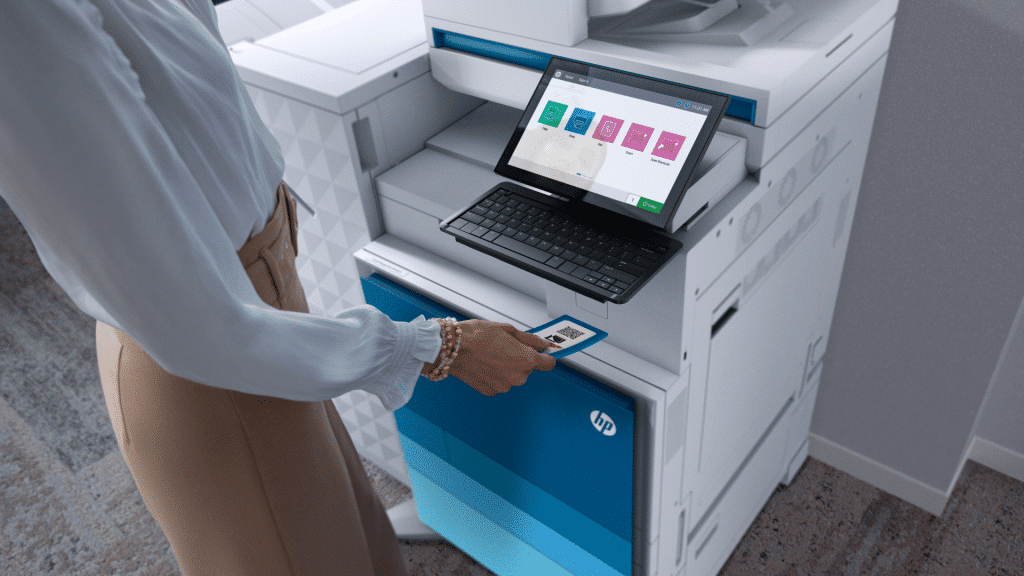
Multifunction printers (MFPs) play a key role in bridging paper-based and digital workflows. By digitising information at the source, they act as the first step in an efficient document management process.
- High-Speed Scanning: MFPs quickly convert large volumes of physical documents – including double-sided pages – into digital files
- Optical Character Recognition (OCR): Advanced MFPs transform scanned text into searchable, editable documents, making retrieval much easier.
By digitising documents at the source, MFPs form the first step in efficient document management.

Choosing the Right Document Management System
Choosing the right system Document Management System (DMS) starts with understanding your business needs and scale. While some organisations prefer cloud-based platforms for remote accessibility, others opt for on-premise solutions for greater control and security.
Key considerations include:
- Security and Compliance: Look for encryption, role-based access, and detailed audit trails.
- Scalability: Select a system that grows alongside your business.
- Integrations: Ensure seamless connections with your existing tools, such as CRMs, ERPs, and collaboration platforms.
- User-friendliness: Adoption depends on intuitive design and ease of use.
Modern DMS platforms increasingly harness AI and OCR technology to automate workflows, extract data intelligently, and even predict how files should be organised. By aligning your choice with long-term business goals, you ensure the system delivers maximum value..
Digital Asset Management vs Document Management
Digital Asset Management (DAM) and Document Management Systems (DMS) serve different purposes in business operations:
- DAM: Designed for storing, organising and sharing rich media such as images, videos and creative content.
- DMS: Focused on structured documents such as contracts, invoices, HR forms and compliance records.
In practice, the two systems can complement each other. Businesses that manage both creative assets and compliance-heavy records may benefit from adopting both solutions to cover the full spectrum of content management.
| Feature / Focus | Digital Asset Management (DAM) | Document Management System (DMS) |
| Primary Use | Managing rich media files (images, videos, audio, creative assets) | Managing structured documents (PDFs, Word files, contracts, invoices, forms) |
| File Types | Photos, graphics, video clips, audio files, marketing materials | Legal documents, financial records, HR files, compliance forms |
| Organisation | Metadata tagging, categories, versioning for creative assets | Indexing, categorisation, full-text search, audit trails |
| Users | Marketing teams, designers, content creators | Legal, finance, HR, operations, compliance teams |
| Collaboration | Creative workflows, approvals, content reuse | Document sharing, version control, workflow automation |
| Compliance | Limited compliance features | Strong compliance, audit and regulatory support |
| Output Focus | Content publishing, brand consistency, campaign management | Secure document storage, compliance, process efficiency |
| Best For | Businesses with large volumes of digital media and branding needs | Businesses requiring secure, organised storage of critical records |
Key Business KPIs Impacted by Digital Document Management
Whether you’re just starting or scaling up, 3D printing has plenty to offer; just plan smartly around the few hurdles.
Implementing a Digital Document Management System (DMS) has a measurable impact on core business KPIs, delivering improvements across productivity, compliance, and profitability.
- Employee Productivity: Centralised access, version control, and fast retrieval mean staff spend less time hunting for files and more time on high-value tasks.
- Operational Efficiency: Digitised workflows reduce paper dependency, streamline approvals, and minimise manual errors – accelerating everyday processes.
- Compliance Adherence: Built-in audit trails and role-based access controls simplify regulatory complicance, reduce risk, and ensure audits are stress free.
- Customer Response Time: Instant access to accurate documents empowers teams to resolve client queries faster, boosting service quality and satisfaction.
- Cost Savings: Lower printing, storage, and courier costs free up resources that can be reinvested into growth initiatives.
- Cost Savings: Lower printing, storage, and courier costs free up resources that can be reinvested into growth initiatives.
- Cost Savings: Lower printing, storage, and courier costs free up resources that can be reinvested into growth initiatives.
By tracking these KPIs, organisations see immediate productivity gains and long-term profitability, making a DMS not just a tool – but a driver of sustainable business growth.
5 Benefits of Digital Document Management
A well-implemented Digital Document Management System (DMS) delivers far more than a paperless office. It transforms the way organisations work, offering advantages that directly support productivity, security, and growth.
- Centralised Access: All documents are stored in one secure digital hub, eliminating silos and multiple file versions. Remote and hybrid teams can access the same files in real time, ensuring everyone works from a single, reliable source of truth.
- Real-Time Collaboration: A DMS enables simultaneous editing, commenting, and document sharing, so teams can collaborate across locations without delays. This helps remove bottlenecks in areas like project approvals, HR processes and client communications.
- Data Security: Encryption, role-based permissions, and activity logs safeguard sensitive information from unauthorised access – critical for industries managing confidential client, employee or financial data.
- Disaster Recovery: Cloud-based backups provide resilience against system failures, accidental deletions or natural disasters, allowing businesses to quickly restore documents and minimise downtime.
- Workflow Automation: Routine tasks such as approval routing, deadline reminders, and archiving are automated, reducing manual workloads, improving accuracy, and accelerating processes.
Practical examples include:
- HR teams automating onboarding by auto-assigning forms to new employees.
- Finance departments streamlining invoice processing.
- Legal teams speeding up contract approvals.
By digitising and automating these everyday processes, businesses save time, reduce costs, and unlock higher efficiency across departments.
Future Trends and Opportunities
The future of Digital Document Management is moving well beyond basic storage and retrieval. Emerging technologies and evolving business needs are driving smarter, more connected solutions that will transform how organisations manage information management. Key trends include:
- AI-Driven Content Recognition and Predictive Workflows: Artificial intelligence will automatically classify documents, extract key data, and predict workflow requirements. This reduces manual effort and ensures information is routed to the right place at the right time.
- Deeper Integrations with Business Systems: Next-generation DMS platforms will integrate seamlessly with project management tools, CRMs, and ERPs. This will create a connected ecosystem where documents, customer data, and operational workflows move together smoothly – boosting productivity and insight.
- Industry-Specific Solutions: Tailored DMS platforms for sectors like healthcare, legal, and finance will offer specialised compliance features, security protocols, and workflow templates to meet unique regulatory and operational challenges.
- Global and Regional Expansion: The demand for secure, scalable DMS solutions continues to rise worldwide. In Australia, the market is predicted to grow strongly, presenting significant opportunities for businesses to gain a competitive edge.
These innovations will not only enhance efficiency but also create new opportunities for differentiation, allowing businesses to stay ahead in an increasingly digital-first world..
Conclusion
Digital Document Management is no longer a back-office tool. It is a core driver of productivity, profitability and resilience in modern business. By streamlining workflows, securing information and supporting collaboration, a DMS empowers teams to focus on higher-value work.
For Australian organisations, now is the time to review document processes and explore how digital solution can deliver measurable results. With Mitronics MFP solutions and integrated document management expertise, your business can reduce costs, strengthen compliance, and unlock its full potential for growth.